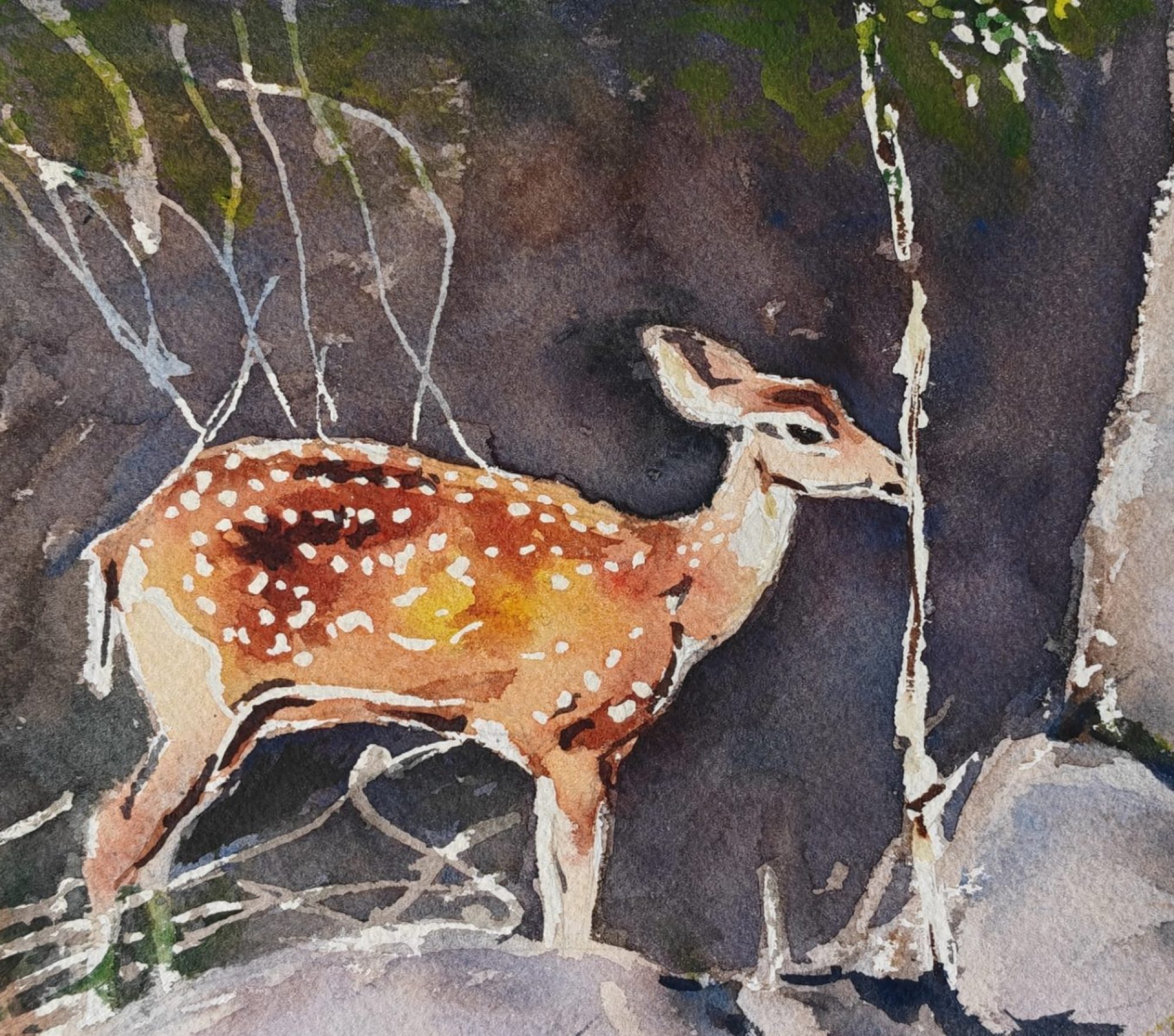


రాళ్ళల్లో చెక్కిన కావ్యాలు
2
శాశ్వత సౌందర్య రాజధాని
హళేబీడు వెళ్లేటప్పటికే మధ్యాహ్నం మూడు దాటింది. అక్కడికి వెళ్లాకకాని మేం చేసిన పొరపాటు మాకర్థంకాలేదు. హళేబీడు మార్గమధ్యంలో ఒక గంటసేపు చూసి వెళ్లిపోయే ప్రదేశంకాదు, అది ఎన్నో రోజుల తరబడి, ఆ మాటకొస్తే నెలల తరబడి, చూస్తూ గడపవలసిన ప్రదేశం. అదేమీ సాధ్యం కాదా, కనీసం ఒక్కరోజైనా, సూర్యోదయం నుంచీ సూర్యాస్తమయం దాకా చూడవలసిన సౌందర్యం. ప్రాచీనస్థలాలు, చారిత్రకస్థలాలు, ఆధ్యాత్మికస్థలాలు చూడాలన్నది మనుషులందరి లోనూ ఉండే సహజమైన ఆకాంక్ష అనుకుంటాను. మరీ ముఖ్యంగా, చారిత్రక స్థలాలు చూడటమంటే, నాకెక్కడలేని ఉత్సాహం. అటువంటిచోట్ల నాకూ, నా ముందు ఈ భూమ్మీద నివసించిపోయిన పూర్వమానవులకీ మధ్య ఒక సంవాదమేదో జరుగుతూంటుంది అనుకుంటాను. వాళ్ల అడుగుజాడల్ని పోల్చుకుంటూ ఆ ప్రాంతాల్లో సంచరిస్తున్నప్పుడు ఏవేవో సందేశాలు వినిపిస్తున్నట్టుంటుంది. పూర్వకావ్యాలు చదివినప్పుడు కలిగే ఆనందంలానే ప్రాచీనస్థలాలు చూస్తూంటే కలిగే ఆనందం కూడా. ఏదైనా ఒక చిత్రలేఖనం చూస్తున్నప్పుడు దానిద్వారా మనకి ఆ చిత్రకారుడి వ్యక్తిత్వం పరిచయమవుతూ ఉంటుంది. ఆ బొమ్మ గీయడం వెనక ఉండే ఆ చిత్రకారుడి జీవస్ఫురణ దాన్నుంచి పైకి ఉబుకుతూ ఉంటుంది. మనం ఆ బొమ్మ చూస్తున్నప్పుడు ఆ జీవస్ఫురణ, ఆ అభివ్యక్తి మనల్ని ఆకట్టుకుంటాయి. ‘ఇదిగో ఇక్కడ ఒక మనిషి తాను జీవించి ఉన్నాననీ, తన జీవితంలో తను ఇటువంటి అనుభూతి పొందాననీ మనకి చెప్తున్నాడు’ అని మనకి స్ఫురిస్తూఉంటుంది. అతడి బతికినక్షణాలకి గుర్తుగా ఆ చిత్రలేఖనం నిలబడి దాన్ని ఎవరు చూస్తున్నా వాళ్లను కూడా వారివారి బతికినక్షణాల గురించి తలచుకునేలా చేస్తుంది. ప్రాచీనస్థలాల్లో మనకి కలిగే అనుభూతి అటువంటిదేననుకుంటాను.
మరొకమాట కూడా చెప్పవచ్చు. ఈ సృష్టిలో మానవుడి జీవితకాలం చాలా పరిమితం. ఒక జీవితకాలంలోనో, ఒక తరంలోనో, లేదా కొన్నితరాలపాటు విలసిల్లిన ఒక రాజ్యయుగంలోనో మనం చేపట్టగలిగేది చాలా స్వల్పం. దాన్లో కాలం తాకిడికి చెక్కుచెదరకుండా ఉండేది మరీ అల్పం. కానీ ఆ స్వల్ప అవశేషమే చాలా ఎక్కువ. నువ్వు ఒక ప్రయత్నమంటూ మొదలుపెడితే దాన్ని పూర్తిచేసినా, చేయలేకపోయినా దాన్లో ఏ స్వల్పఅవశేషం కాలం తాకిడికి తట్టుకుని నిలిచినా, ఆ కొద్ది ఆనవాళ్ల ఆధారంగా నీ తరువాతి తరంవాళ్లు ఎంతో స్ఫూర్తిపొందుతారు. అటువంటి ప్రయత్నాలే లేకపోతే కేవలం దైనందిన కార్యకలాపంతో మాత్రమే కూడుకుని ఉన్న ఈ జీవితానికి ప్రత్యేకమైన అర్థమూ ఉండదు, ఆరాధనీయమైన సౌందర్యమూ ఉండదు.
ఒకప్పుడు ద్వారసముద్రంగా పిలవబడి మూడునాలుగు శతాబ్దాలపాటు హొయసల చక్రవర్తుల రాజధానిగా పేరొందిన ఆ ప్రాంతం నేడిప్పుడు పాడుబడ్డ ఒక బీడు. హళేబీడు అంటేనే పాడుపడ్డ గ్రామమని అర్థమట. ఇప్పుడు ఆ ఊరు ఒక రాజకీయరాజధాని కాకపోవచ్చు. సాంస్కృతికంగా కళాసాహిత్యరంగాల్లో, వర్తమానజీవితంలో ఆ ఊరు నిర్వహిస్తున్న పాత్ర శూన్యమని కూడా చెప్పవచ్చు. కాని భారతీయ శిల్పకళాసామ్రాజ్యానికి మాత్రం హళెబీడు ఒక శాశ్వతరాజధాని. నా జీవితంలో నేనంతముందుగానీ, ఆ తరువాతగానీ అటువంటి శిల్పకళా వైభవాన్ని మరెక్కడా చూడలేదు.
హళేబీడులో దేవాలయం పక్కనున్న తటాకాన్ని రాష్ట్రకూటులు 9వ శతాబ్దిలో తవ్వించారు. ఆ నగరాన్ని 12వ శతాబ్దంలో విష్ణువర్ధనుడు నిర్మించాడు. క్రీ.శ. 1121లో విష్ణువర్ధనుడి సేనాపతి కేతుమల్లుడనేవాడు ఆ తటాకం ఎదుటనున్న హొయసలేశ్వర దేవాలయనిర్మాణం మొదలుపెట్టాడు. 105 సంవత్సరాల నిర్విరామనిర్మాణకార్యక్రమం తరువాత కూడా ఆ దేవాలయం అసంపూర్ణంగానే మిగిలిపోయిందని చెప్తారు. ఆ దేవాలయ నిర్మాణం పూర్తికాకుండానే మాలిక్ కాఫూర్ గుర్రాలదండు 1311లో ద్వారసముద్రంమీదికి విరుచుకుపడింది. కొద్దిరోజులు కూడా గడవకుండానే మహమ్మద్ బీన్ తుగ్లక్ సైన్యాలు క్రీ.శ. 1326లో మరొకసారి ఆ నగరంమీదికి విరుచుకుపడి ఆ నగరాన్నీ, దాని సంపదనీ, దాని వైభవాన్నీ పూర్తిగా కొల్లగొట్టాయి. అయితే, ఆ నగరం తన ఉచ్చస్థితిలో ఉన్నప్పుడుకానీ, పతనావస్థలోకానీ, బీడుపడ్డాక కానీ ఆ నగర ఉత్థానపతనాలతో సంబంధంలేకుండా ఆ దేవాలయం అట్లానే నిలబడింది. ఆ దేవాలయం అసంపూర్ణం అంటే బహుశా మరికొన్ని నిర్మాణాలో, మరికొన్ని అర్చాకార్యక్రమాలో పూర్తికాకుండానే ఆగిపోయాయని అర్థం చేసుకోవచ్చు. కాని శిల్పపరంగా ఆ దేవాలయాన్ని అసంపూర్ణం అనలేం. ఆ మాటకొస్తే గొప్ప కావ్యాల్లో, గొప్ప శిల్పాల్లో ఏదో ఒక అసంపూర్ణత మనకి స్ఫురించకుండా ఉండదు. అత్యంత రసరమ్యమైన ఈ భగవత్సృష్టిలోనే ఎంతో లోపముందనీ, ఎంతో కొరత ఉందనీ ఈ భూమ్మీద ప్రవేశించిన ప్రతిమనిషీ భావిస్తూనే ఉన్నాడు. బహుశా మహాసౌందర్యం ఎదుట నిల్చున్నప్పుడు నువ్వు చూస్తున్న సౌందర్యం, నువ్వు చూడలేకపోతున్న, మహనీయసౌందర్యాన్నిదేన్నో గుర్తుకుచేస్తూ నీలో ఆ అసంపూర్ణతను జాగృతం చేస్తుందేమో. లేదా మనకి ఆ దేవాలయం ఎదుట నిల్చున్నప్పుడు స్ఫురించేది అసంపూర్ణత్వం తాలూకు భావన కాక, అశాశ్వతత్వం తాలూకు భావనేనేమో.
అందుకని హళెబీడులో హొయసలేశ్వరదేవాలయాన్ని నేనొక శిథిలంగానో, ప్రాచీనఅవశేషంగానో లేదా చారిత్రక ప్రాధాన్యత నిర్మాణంగానో మాత్రమే చూడలేకపోయాను. ఆ దేవాలయం నిన్న రాత్రే ఎవరో అక్కడ ప్రతిష్ఠించినట్లుగా కొత్తగా, ఎంతో స్ఫూర్తిమాత్రంగా నా కళ్లకు కనిపించింది. అందుకని హోయసలేశ్వర దేవాలయ శిల్పాలముందు నిల్చున్నప్పుడు మనకి కలిగేది శాశ్వతత్వం గురించిన హామీయేనని నాకు చాలా బలంగా అనిపించింది. నా కళ్లముందున్నది ఒక రాతికట్టడమనిపించలేదు నాకు. ఇదే మాట హెన్రిక్ జిమ్మర్ కూడా అన్నాడు. భారతీయ శిల్పం గురించి ఆయన రాసుకున్న నోట్సు ఆధారంగా జోసెఫ్ కాంబెల్ వెలువరించిన ‘ద ఆర్ట్ ఆఫ్ ఇండియన్ ఆసియా’ (1960) లో ఆయనిట్లా రాసాడు:
‘(హొయసలేశ్వర దేవాలయ) శిల్పుల ప్రతిభ ఆ నిర్మాణ ప్రణాళికకీ, నిర్మాణానికీ ఒక మార్దవాన్ని సమకూర్చింది. ఆ మొత్తం నిర్మాణాన్ని వెలుగునీడల రసరమ్యఖేలకొక రంగస్థలిగా అమర్చిపెట్టింది. నిజం చెప్పాలంటే, అక్కడ రాతిని ఒక కాగితంలానో, దంతంలానో తీర్చిదిద్దారని చెప్పవచ్చు. స్థూలనిర్మాణం మీద అలంకారవైభవానిదే పైచేయి అయింది… మొత్తం సముదాయమంతా కూడా ఏ మహామానవి కోసమో తయారుచేసిన వజ్రాలభరిణలాగా ఉంది. అలా రూపొందించడానికి ఆ రాయి ఆటంకం కాలేదు. ఎవరన్నా కేవలం ఆ రాయి గురించే ఆలోచించినా ‘ఇదేమి రాయి?’ అని ఆశ్చర్యపోకుండా ఉండలేరు’.
అక్కడ శిల్పులు రాళ్లకూర్పుతో ఒక సంగీతాన్ని సృష్టించారని కూడా అనాలి. గత ఏడెనిమిది శతాబ్దాలుగా ఆ నీలాకాశం కింద, ఆ పచ్చికబయళ్లమధ్య ఒక నీలికలలాగా ఉన్న ఆ సరస్సు ఒడ్డున, ఆ సంగీతం అనాహతంగా వినిపిస్తూనేవుంది. అక్కడికి వెళ్లి దాని ముందు నిల్చున్న ప్రతిఒక్క సందర్శకుడికీ ఈ దేవాలయం ‘కనిపించడం’ కాక, సంగీతంగా ‘వినిపిస్తూ’ ఉందని కూడా నాకు స్ఫురించింది. బహుశా మాలిక్ కాఫూర్ సైనికులకీ, మహమ్మద్ బీన్ తుగ్లక్ సిపాయిలకీ కూడా ఈ సంగీతం వినిపించి ఉండవచ్చు. అందుకనే దేవాలయ ధ్వంసమే ప్రధానవ్యాపకంగా పెరిగిన సుల్తనీయసేనలు ఈ దేవాలయాన్ని ముట్టుకోకుండా వదిలేసాయి. బహుశా ఈ దేవాలయం అసంపూర్తిగా ఉన్నందువల్లా, ఇందులో దేవీదేవతలకు వజ్రవైఢూర్యాలూ, రత్నరాశులూ, అలంకారాలుగా పెట్టనందువల్లా కూడా ఈ దేవాలయం బతికిపోయి ఉండవచ్చు.
కానీ ఈ దేవాలయాన్ని నిర్మిస్తున్న శిల్పులకి ఈ దేవాలయసంపద ఏమిటో స్పష్టంగా తెలుసు. వాళ్లు ఈ సంపదని బాహాటంగా ఆరుబయట నేత్రానందంగా పరిచిపెట్టారు. ఈ రత్నరాశుల్నీ, ఈ మణిమాణిక్యాల్నీ కళ్లతో కొల్లగొట్టుకోవలసిందేతప్ప, చేతులతో జేబులు నింపుకోలేం. ఇట్లాంటి ఎన్నో ఆలోచనలతో, హళేబీడు దేవాలయం చుట్టూ పిచ్చివాడిలా అటూఇటూ ఏది ముందు చూడాలో, ఏది వెనకచూడాలో, ఏది తొందరగా చూడాలో, ఏది నిదానంగా చూడాలో తెలుసుకోలేక పరుగులు పెడుతుండగానే పొద్దువాలిపోవడం మొదలైంది. నాకు హళెబీడు గురించీ ఎవరూ సరిగ్గా ఎందుకు చెప్పలేదా అనిపించింది.
ఇక్కడికి రావలసింది ఇలా కాదనీ, ఒక స్కెచ్బుక్తో, పెన్సిల్తో వచ్చి ఉండగలిగినంతకాలం ఇక్కడే ఉండిపోవాలనిపించింది. యూరోప్ చిత్రకారుల్లో సుప్రసిద్ధుడైన రెంబ్రాంట్ చిత్రించిన ‘జువిష్ బ్రైడ్’ చిత్రాన్ని మొదటిసారి చూసినప్పుడు మరొక సుప్రసిద్ధచిత్రకారుడు వాన్ గో ‘తనచేతిలో ఇంత రొట్టెపెట్టి ఆ బొమ్మనట్లా రెండువారాల పాటు చూసే అవకాశమిస్తానంటే తన తక్కిన జీవితంలో పదేళ్లకాలం త్యాగం చేయడానికి సిద్ధమ’న్నాడు.

The Jewish Bride, Rembrandt, 1665-69
హళేబీడు గురించి నేను కూడా ఆ మాటలే చెప్పగలను. ఎందరో మహాకళాకారులు ఎన్నో తరాలపాటు చేసిన సాధన ఇది. ఒక సందర్శకుడు ఒక్కజీవితకాలంలో దీన్ని పూర్తిగా తన అనుభవంలోకి తెచ్చుకోవడం అసాధ్యం. హళేబీడు నుంచి బేలూరు వెళ్లామేకానీ, హళేబీడు చూసిన తరువాత నాకు మరికొన్నాళ్ల పాటు ఇంకేమీ చూడలేననిపించింది. ఇంకేదీ చూడకూడదనిపించింది. హళేబీడు సౌందర్యం కొన్నాళ్లపాటు చూస్తూ ఉండవలసిందయితే ఆ సౌందర్యాన్ని చూసినతరువాత మరికొన్నాళ్లపాటు దాన్ని కేవలం ధ్యానిస్తో, నెమరేస్తో ఉండాల్సిందే.
బేలూరు వెళ్లేటప్పటికే సూర్యుడు అస్తమించాడు. ఎర్రటి సంధ్యవెలుగు ఆ పట్టణమంతా అలముకుంది. హళేబీడుతో పోలిస్తే బేలూరు చాలా పెద్ద ఊరు. ఆ దేవాలయం ఒక శిథిలం కాదు. అదిప్పటికీ ఒక సందర్శనాలయంగా మాత్రమేకాక, దేవాలయంగాకూడా కొనసాగుతోంది. దేవాలయం లోపల ప్రతిమలు, అలంకరణ, లోపలి పైకప్పు, నగిషీలు నిజంగా అద్భుతంగా ఉన్నాయి. హళేబీడు మొదలుపెట్టినకాలంలోనే విష్ణువర్ధనుడు క్రీ.శ. 1116లో ఈ చెన్నకేశవ ఆలయాన్ని నిర్మించాడు. అమరశిల్పి జక్కనగా పేరు పొందిన జక్కనాచారి దీని సృష్టికర్త. దాదాపు ఒక శతాబ్దకాలంపాటు కొనసాగిన నిర్మాణం. దేవాలయ సౌందర్యాన్ని చూస్తున్నంతసేపూ ‘శిలలపై శిల్పాలు చెక్కినారు, మనవారు సృష్టికే అందాలు తెచ్చినారు’ అన్న కవిమాట పదేపదే స్ఫురిస్తూ ఉంది. అత్యధిక సంఖ్యాకుల దృష్టిలో హళేబీడు ఆలయ బాహ్యసౌందర్యానికి ప్రాధాన్యమిస్తే బేలూరు దేవాలయం లోపలి సౌందర్యానికి ప్రాధాన్యమిచ్చింది. కాబట్టి చరిత్రకారుల దృష్టిలో హొయసల శిల్పవైభవానికి బేలూరు పరాకాష్ట. కాని నా తీర్పు వేరే విధంగా ఉంది.
ఎందుకంటే, ‘జువిష్ బ్రైడ్’ చిత్రం గురించి పరవశిస్తూ వాన్ గో తన తమ్ముడికిట్లా రాశాడు:
‘(రెంబ్రాంట్ చిత్రించిన) ‘ద సిండిక్స్’ చిత్రం పరిపూర్ణమైంది, ఎంతో సన్నిహితంగా స్ఫురిస్తున్నది, అనంత సహానుభూతి వెల్లివిరుస్తున్న చిత్రమది. చూడు, రెంబ్రాంట్ దాన్ని చాలా సహజంగా, ఉన్నదున్నట్టుగా చిత్రించాడు. అయితే, అందులో కూడా, అతడు తనకి తగ్గట్టే, అతడెప్పుడూ చేసేటట్టే, పైకి, ఎంతో పైపైకి, అనంతవిశ్వంలోకీ రెక్కలు చాచడం లేకపోలేదు. కాని, ఇక్కడ ఒక ముఖచిత్రాన్ని గీస్తున్నప్పటిలాగా సహజత్వానికి దగ్గరగా ఉండవలసిన అవసరం లేకపోవడంతో, తను దర్శిస్తున్నదాన్ని ఒక ఆదర్శస్థాయికి తీసుకుపోగల స్వేచ్ఛ ఉండటంతో, ఒక కవిగా మారే అవకాశం ఉండటంతో, ఈ చిత్రంలో, రెంబ్రాంట్ చాలా ఔన్నత్యాన్ని సాధించగలిగాడు. అంటే, సృష్టికర్తకాగలిగాడన్నమాట. అదీ, జువిష్ బ్రైడ్ చిత్రంలో మనం రెంబ్రాంట్ ని చూడవలసిన పద్ధతి. డెలాక్రా ఈ చిత్రాన్ని ఎలా అర్థం చేసుకునిఉంటాడు? ఎంత ఉదాత్తసృజన, ఎంత ప్రగాఢానుభూతి’.

The Syndics, Rembrandt, 1662
కవిత్వం, అదీ, మనమిక్కడ గుర్తించాల్సిన మాట. ఒకే చిత్రకారుడు గీసిన రెండు చిత్రాల గురించి మాట్లాడుతూ వాన్ గో ఒక చిత్రం గొప్ప చిత్రలేఖనంకాగా, మరొకటి కావ్యత్వాన్ని అందుకుందన్నాడు.
హొయసలేశ్వర దేవాలయం నాకు రాళ్లల్లోచెక్కిన కావ్యంలాగా అనిపించింది. అక్కడ నా ఎదుట గోచరించిన ప్రతిఒక్క ఆకృతి, ప్రతిఒక్క వంపూ, ప్రతిఒక్క శిల, ప్రతిఒక్క పంక్తి ఒక పదబంధం లాగా, రమణీయసమాసంలాగా ఎన్నాళ్లయినా చెక్కు చెదరని పద్యపాదంలాగా కనిపించింది. కవులు పదంవెనుక పదం చేర్చి పద్యాన్ని నిర్మించినట్టే అక్కడ శిల్పులు రాయిమీద రాయిపేర్చి ఒక శిల్పాన్ని నిర్మించారు. బేలూరులో ఉన్నది పరిపూర్ణ శిల్పమే, సందేహం లేదు, కాని అది రెంబ్రాంట్ చిత్రించిన ‘సిండిక్స్’ చిత్రంలాగా పరిపూర్ణశిల్పం మాత్రమే. కాని హళేబీడు కావ్యం. బేలూరు శిల్పాల్లో నగిషీ చాలా ఎక్కువ. ఇక్కడ శిల్పి నైపుణ్యానిదే పెద్ద పాత్ర. హళెబీడు శిల్పాల్లో ఉన్న సద్యఃస్పందన (స్పాంటెనిటి), సారళ్యం, సహజసౌందర్యం బేలూరు శిల్పాల్లో కనిపించదు. అయినాకూడా, బేలూరు కూడా ఒక కావ్యమేనని నన్ను ఒప్పించాలని చూస్తే, చివరికి, నేను హళేబీడు మనుచరిత్రలాంటి కావ్యమయితే, బేలూరు వసుచరిత్రలాంటిదంటాను.
ఆ సాయంకాలం చెన్నకేశవ స్వామి గర్భగుడిలో మాకు దేవుడిని హారతిఇచ్చి చూపించారు. హారతి ముగిసిన తరువాత నైవేద్యసమయంలో దేవుడిముందు తెర కప్పారు. ఆ తెర మాసిపోయిన ఒక పట్టువస్త్రం. నాకు ఆ జీర్ణవస్త్రం కాలగర్భంలో కలసిపోయిన మహాసామ్రాజ్యాలకు ఆనవాలనిపించింది. కాని చెన్నకేశవమూర్తి కాలానికీ, రాజ్యాలకీ అతీతమైన సౌందర్యంతో, వైభవంతో అలరారుతూనే ఉన్నాడు. తనతోపాటు, తన చుట్టూ శిల్పాలుచెక్కి, సృష్టికే అందాలు తెచ్చిన కళాకారులకు కూడా అమరత్వాన్ని ప్రసాదిస్తున్నాడు.
బేలూరునుంచి హసన్ మీదుగా మైసూరు ప్రయాణం. మైసూరులో రాత్రి బస. మరుసటిరోజు దసరా ఉత్సవాల్లో మైసూరు రాజభవనం చూడాలని పిల్లలు ఉవ్విళ్లూరుతున్నారు.
Poems Carved in Stone
2
The Eternal Capital of Beauty
By the time we arrived at Halebidu, it was past three in the afternoon. Only upon setting foot there did the scale of our miscalculation dawn upon us. Halebidu is not an intermediate waypoint to be glanced over in an hour; it is a landscape demanding days, if not whole months, of devoted contemplation. Even if that remains unattainable, it is a splendor that calls for at least a full day, from the break of dawn to the fall of dusk.
A yearning to visit ancient, historic, and sanctified sites is, I believe, natural to all of us. Yet for me, exploring historical grounds awakens an unmatched stir of the spirit. In such places, I feel a quiet dialogue opening between myself and the forebears who once walked this earth. Wandering their precincts, tracing their footsteps, one seems to catch distant, whispered dispatches across the ages. The joy of beholding ancient sites is akin to the delight of reading classical poetry.
When looking upon a painting, the painter’s inner life reveals itself to us. The vital spark that stirred the artist to draw wells up from the canvas. As we gaze, that animating presence and expression lay hold of our senses. An intuitive recognition rises within: “Here, a fellow mortal tells us that he lived, that he felt this very pulse of existence.” The work endures as a monument to his living hours, compelling whoever stands before it to reflect upon their own brief, lived moments. Such is the exact feeling that awakens within us before ancient ruins.
One might say something more: within the vastness of creation, human life is painfully brief. What can be accomplished in a single lifetime, in a solitary generation, or during the brief reign of a flourishing empire, is minuscule. What withstands the abrasion of time is smaller still. Yet that frail remnant counts for immense riches. If one embarks upon an endeavor, whether completed or left unfinished, whatever fragment survives the toll of time becomes a profound wellspring of inspiration for generations to come. Without such strivings, a life consumed solely by mundane, day-to-day transactions possesses neither enduring meaning nor a beauty worthy of devotion.
Once known as Dwarasamudra and celebrated for three or four centuries as the imperial capital of the Hoysalas, this place is today a desolate fallow land. Indeed, the very name Halebidu means “the ruined settlement.” It may no longer be a seat of political power; culturally, in literature and the arts, its role in contemporary life might appear reduced to nothingness. Yet within the empire of Indian sculpture, Halebidu remains an eternal capital. Never before in my life, nor ever since, have I witnessed sculptural splendor of such breathtaking magnitude.
The temple tank at Halebidu was excavated by the Rashtrakutas in the ninth century. The city was founded in the twelfth century by King Vishnuvardhana. In 1121 CE, Ketamalla, a high commander under Vishnuvardhana, commenced the construction of the Hoysaleshwara temple fronting that tank. It is said that even after 105 years of unceasing labor, the temple remained incomplete. Before the work could reach its final close, the cavalry of Malik Kafur descended upon Dwarasamudra in 1311 CE. Not long after, in 1326 CE, the forces of Muhammad bin Tughlaq struck once more, plundering the city, stripping its wealth, and extinguishing its imperial glory.
Yet through all this—in the hour of the city’s zenith, through its sudden fall, and into its desolate abandonment—the temple stood steadfast, unconcerned with the rise and collapse of dynastic fortunes. That the temple is termed “incomplete” perhaps indicates that certain ancillary structures or ritual consecrations were cut short. But sculpturally, one cannot pronounce it incomplete.
In truth, in every supreme poem or monument, an intimation of incompletion inevitably touches us. Even in this profoundly poignant, divinely wrought cosmos, every soul entering the world senses an intrinsic lack, a lingering incompleteness. Perhaps when standing before supreme beauty, the splendor you behold awakens an awareness of that grander, unmanifest beauty you cannot grasp, stirring that latent sense of incompletion within you. Or perhaps what wells up before such a shrine is not a perception of incompleteness at all, but a poignant reminder of our own transience.
Thus, I could not look upon the Hoysaleshwara temple at Halebidu merely as a ruin, an ancient relic, or a monument of historical note. It presented itself to my eyes as freshly minted and vividly alive, as though consecrated only the previous night. Standing before the sculptures of the Hoysaleshwara temple, one receives an unshakable assurance of eternity.
It never struck me as a mere edifice of stone. Heinrich Zimmer observed this very quality. In The Art of Indian Asia (1960), compiled and edited by Joseph Campbell from Zimmer’s notes, he wrote:
“The sculptural genius of the Hoysala decorators has introduced a softness into the architectural design and execution, and furnished a setting for a lovely play of lights and shadows. It would be true to say that here stone has been handled like wood, ivory, or parchment; the tectonic factor has been totally subordinated to the decorative… The whole complex looks like an exquisite jewel-box of carved ivory, prepared for the boudoir of some supernal queen. The stone has offered no resistance to the master sculptors; and if one thinks of the stone at all, one cannot but marvel: ‘What kind of stone is this?’”
One must also say that here the sculptors wrought music through the arrangement of stone. For the past seven or eight centuries, under that blue sky, flanked by grassy meadows and poised on the banks of a tank resting like an azure dream, that music has sounded unceasingly. It struck me that for any traveler standing before it, this temple is not merely “seen”; it is “heard” as living melody.
Perhaps that music made itself heard even to the soldiers of Malik Kafur and Muhammad bin Tughlaq. Perhaps that is why the sultanate armies, whose primary campaign was often the sack of shrines, spared this temple from wholesale demolition. Or perhaps it survived because it stood unfinished, its deities unadorned with rubies, diamonds, and hoarded royal gems.
Yet the sculptors raising this temple knew with absolute clarity what its true wealth was. They laid out that treasure in the open air, a feast for the eyes. These gems and radiant jewels can be pillaged only by sight; no hand can hoard them into a purse.
Beset by such swirling thoughts, I rushed frantically around the perimeter of Halebidu like an intoxicated wanderer, bewildered over what to view first, what to see next, what to take in swiftly, and what to study in slow reverie—all while the sun began its steady descent. I wondered why no one had ever truly conveyed to me what Halebidu was.
One ought not to come here like this; one should arrive equipped with a sketchbook and a pencil, prepared to linger for as long as life permits. When Vincent van Gogh first encountered Rembrandt’s The Jewish Bride in Amsterdam, he declared that he would gladly give up ten years of his life if he could sit before that picture for a fortnight with only a crust of bread to eat. Standing before Halebidu, I could say the very same. This is the consecrated striving of master artists spanning generations. For a traveler, absorbing it fully within a single lifetime remains impossible.
Though we departed Halebidu for Belur, a conviction settled over me after beholding Halebidu that I could look upon nothing else for a long time to come. I felt I ought not to look upon anything else. If the beauty of Halebidu demands weeks of unbroken viewing, then having once beheld it, one must spend weeks simply meditating upon it, turning it over in the mind.
By the time we reached Belur, the sun had already slipped below the horizon. A deep, crimson twilight enveloped the town. Compared to Halebidu, Belur is a far larger town. Its shrine is no historical relic; it continues not merely as a heritage destination, but as a living, sanctified temple of daily worship.
The icons within the sanctum, the ornamental flourishes, the carved ceilings, and the pierced screens are truly marvelous. Around the same time Halebidu was commenced, King Vishnuvardhana built this Chennakeshava temple in 1116 CE. Its creation is attributed to the legendary sculptor Jakkana, revered as Amara Shilpi (the immortal master). The construction spanned nearly a century. Gazing upon the temple’s grace, the words of the poet echoed repeatedly in my mind: “They carved poems upon stones; our ancients lent beauty to creation itself.”
In the popular estimate, where Halebidu emphasizes exterior sculptural grandeur, Belur exalts interior refinement. Historians often regard Belur as the ultimate summit of Hoysala sculptural brilliance. Yet my own judgment diverged. Reflecting on The Jewish Bride, Van Gogh wrote to his brother Theo with breathless admiration:
“The Syndics is perfect, is the most intimate, the most infinitely sympathetic… You see, he did that purely from nature, as it was… But here he couldn’t keep close to the portrait-like reality, had to idealize, was poet, that’s to say Creator. That’s how one must look at The Jewish Bride… What a noble painting, and of what profound intimacy.”
Poetry—that is the essential word we must lay hold of here. Speaking of two masterworks by the same artist, Van Gogh observed that while one was an extraordinary painting, the other had attained the elevation of poetry.
The Hoysaleshwara temple struck me as an epic poem carved in stone. Every form, every supple curve, every slab, every sculptural tier before my eyes appeared like a phrase, an exquisite compound, a verse line enduring imperishably across time. Just as poets arrange word upon word to build a stanza, those master craftsmen laid stone upon stone to compose an epic. What stands at Belur is flawless sculpture beyond doubt—yet it is flawless sculpture in the manner of Rembrandt’s The Syndics. Halebidu is pure poetry.
In Belur’s carvings, delicate ornamentation and filigree dominate; the technical virtuosity of the sculptor reigns supreme. The immediate freshness, simplicity, and unforced grace of Halebidu are absent there. If one insisted on persuading me that Belur too is a poetic work, I would conclude: if Halebidu is like Allasani Peddana’s Manucharitra, then Belur is like Ramarajabhushana’s Vasucharitra.
That evening, in the inner sanctum of Sri Chennakeshava Swamy, the priests offered the harati before us. After the flame had been offered, during the ritual presentation of naivedya, a curtain was drawn across the sanctum to veil the deity. That curtain was a faded, worn silk cloth. To me, that aged fabric seemed a poignant emblem of great imperial dynasties swallowed by the abyss of time.
Yet Lord Chennakeshava continued to radiate an ageless majesty and grace, soaring high above empires and centuries. And alongside Himself, He bestowed immortality upon those nameless artists who, carving stone around Him, had lent beauty to creation itself.
From Belur, we drove by way of Hassan toward Mysore for our night halt. The children were already filled with eager anticipation, looking forward to beholding the illuminated Mysore Palace during the festive splendor of Dasara the next day.
18-9-2026
నేను * నొక్కి లైక్ అని మాత్రమే చెప్పగలుగుతున్నాను. కాని మీ ప్రతి ఆర్టికల్ చదివాకా ఎంతో చెప్పాలనిపిస్తుంది, శక్తి చాలదు. ప్రతీ వ్యాసం నా మనసాకాశం లో ఒక తారక లా (ఆఫకొర్స్ కొన్ని చిన్నవి, కొన్ని పెద్దవి ) అవుతుంది.
హృదయపూర్వక ధన్యవాదాలు సార్!
“ఈ సృష్టిలో మానవుడి జీవితకాలం చాలా పరిమితం. ఒక జీవితకాలంలోనో, ఒక తరంలోనో, లేదా కొన్నితరాలపాటు విలసిల్లిన ఒక రాజ్యయుగంలోనో మనం చేపట్టగలిగేది చాలా స్వల్పం. దాన్లో కాలం తాకిడికి చెక్కుచెదరకుండా ఉండేది మరీ అల్పం. కానీ ఆ స్వల్ప అవశేషమే చాలా ఎక్కువ. నువ్వు ఒక ప్రయత్నమంటూ మొదలుపెడితే దాన్ని పూర్తిచేసినా, చేయలేకపోయినా దాన్లో ఏ స్వల్పఅవశేషం కాలం తాకిడికి తట్టుకుని నిలిచినా, ఆ కొద్ది ఆనవాళ్ల ఆధారంగా నీ తరువాతి తరంవాళ్లు ఎంతో స్ఫూర్తిపొందుతారు.”
హాళేబీడు … పాడుపడ్డగ్రామమని ఎందుకు పేరుపెట్టారో?
ఈ అపూర్వ శిల్పసంపద గల హళేబీడు నేనింత వరకూ చూడలేదు… ఈసారి వెళ్లాలి.
అక్కడ ఒక చెరువు ఉంది. ఆ చెరువుని ద్వార సముద్రం అని పిలుస్తారు. ఆ ఊరును కూడా ఆ పేరుతోనే పిలిచేవారు అనుకుంటాను. కాలక్రమంలో ఆ ప్రాంతం పాడు పడ్డాక హలే బీడు అని పిలవడం మొదలైంది.
హళేబీడు, బేలూరు శిల్ప సౌందర్యం ఎవరినైనా సమ్మోహపరుస్తుంది. అప్పుడెప్పుడో చదువుకునే రోజుల్లో చూసినా ఇప్పటికీ మరపురాదు. ఈ రెండింటి మధ్య ఉన్న తేడాను చక్కగా వర్ణించారు. ఇంకోసారి ఇప్పుడు వెళ్ళి చూస్తే బావుండనిపిస్తోంది. థ్యాంక్యూ 🩶