
In writing the epic poem Panditaradhya Charitra, Palkuriki Somanatha (Somana) had two primary objectives. First, he sought to prove to the elite that the deshi meter of dvipada was capable of accommodating the grandest vocabulary from any language, including Sanskrit. The work stands as a testimony to his poetic skill, the merit of his style, and the vast scale of his scholarly heights.
However, his second objective was deeper and more complex. Somana recognized that the society of his time was fractured, driven further apart by sociopolitical forces. He sought a space where this fragmented society could be integrated, certain that an orthodox society burdened by caste hierarchy could no longer hold people together. Finding no leader like Basava in his own lifetime, his ardent search became a journey that eventually led him to Sri Parvata (present-day Srisailam).
I would argue that the true protagonist of Panditaradhya Charitra is not Mallikarjuna Pandita, but the sacred mountain of Sri Parvata itself. Somana found the mountain to be the only solace capable of bringing diverse people together and leading them toward a single-minded, purpose-driven life—a model later emulated by Annamayya three centuries later. On the road to this sacred peak, Somana witnessed a confluence of diverse languages, traditions, and ways of life; it was a “pilgrim’s progress” written four centuries before Bunyan’s The Pilgrim’s Progress.
Along this path, one encounters Tamil pilgrims, Marathi-speaking travelers, and crowds from the Kannada region, all moving toward a single destination. The narrative captures elderly devotees, the truly pious, and men of both high and low character. One finds the truly detached, the worldly, the otherworldly, and even a band of hypocrites, all traveling in unison. Furthermore, Somana highlights not only the elite but also marginalized groups like the Chenchus and the Piccukuntlas. The entire canto devoted to the description of Sri Parvata mirrors the Paradise from Dante’s Divine Comedy, in both letter and spirit.
One Mountain, Many Forms
This Sri Parvata takes on many incarnations,
Serving the pilgrims in endless ways.
He manifests as cool springs to quench their thirst,
And as sacred lingas to receive their rites.
He showers bounty like trees laden with fruit,
And offers respite like a canopy of rain-clouds.
He grants fragrance through flowering creepers,
And brushes away weariness as a gentle breeze.
He provides a resting ground as the lush forest,
And chants the Lord’s glory in the voice of a scholar.
Like a village guard, he watches over the paths,
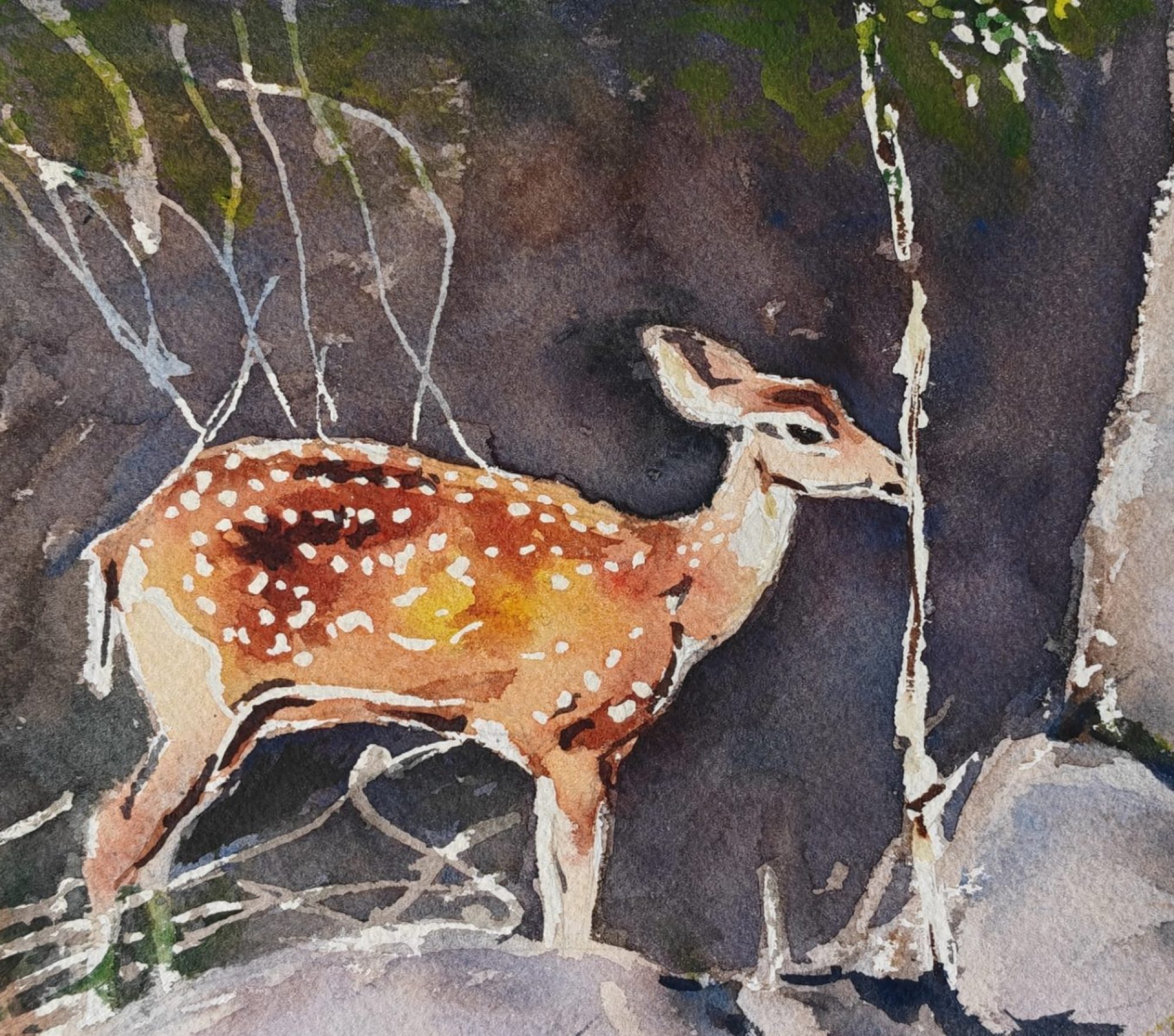
And like fleeting deer, he makes them forget their thirst.
In the form of birds, he delights the eye;
As a guest, he accepts their humble offerings.
He kindles faith in the guise of a steadfast saint,
And offers wise counsel like a trusted friend.
He stirs hope as small hamlets appearing here and there;
He purifies the soul as a sacred shrine,
And grants ultimate liberation as the holiest of rivers.
Original from Telugu
నారఁగఁ బెన్నదులై ముక్తు లొసగుఁ
An Interesting Analysis of Yours. Somanatha opened up my eyes to the Divine Bliss showering by Sriparvata without Partiality to each and Every Human Being. I had a similar Feeling when I First Visited the Holy Place in the Winter of 1968.I found many Vibrations when I Meditated on the Vast Interior of the Temple. Similar Sentiments of Impartiality by the Paramatma in treating all living beings of the earth were expressed by Sri Annamacharya in “Tanadanana Pure Tandanana”.